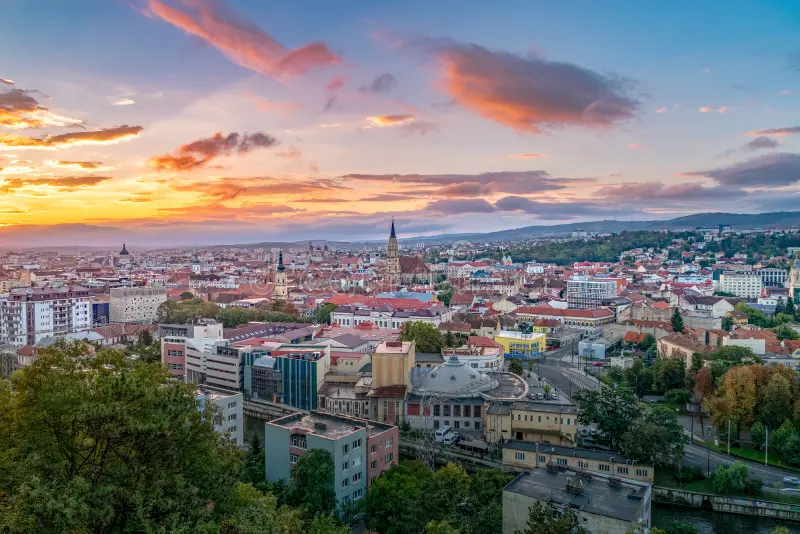
A friend of mine — American, works remotely for a San Francisco startup — messaged me last year asking if he should get Romania’s digital nomad visa for a six-month stay. He was looking at Bucharest or Cluj, had heard good things, and wanted to do it “properly.”
I spent about an hour talking through the options with him. By the end of the conversation, we had both concluded that the visa probably wasn’t the right move for his situation — even though Romania’s DNV is actually one of the better-structured programs in Europe. The answer, as with most visa questions, is: it depends.
Here’s the full breakdown so you can make the call yourself.
Romania’s Digital Nomad Visa — The Basics
Romania launched its digital nomad visa program in 2021 under Law 22/2022, making it one of the earlier EU-adjacent countries to create a formal pathway for remote workers.
Key facts:
- Duration: 12 months, renewable once (so up to 24 months total)
- Eligibility: Non-EU citizens working remotely for a foreign employer or clients outside Romania
- Minimum income requirement: At least 3x Romania’s gross minimum wage per month (in 2026, roughly €1,800–€2,100/month gross — check current rates before applying)
- Where to apply: Romanian embassy or consulate in your country of residence
- Processing time: 30–60 days typically, though this has varied
What you need to apply:
– Proof of employment or active client contracts (employment letter, freelance contracts, bank statements)
– Proof of income meeting the minimum threshold
– Valid health insurance covering Romania
– Criminal background check
– Proof of accommodation in Romania (rental contract or booking)
– Passport valid for at least 6 months beyond the visa period
Costs — What to Actually Budget For
The visa application fee itself is relatively low (around €100–120), but the real costs are elsewhere:
| Item | Estimated Cost |
|---|---|
| Visa application fee | ~€120 |
| Criminal background check (apostilled) | €50–100 depending on country |
| Health insurance (12 months) | €300–800 depending on provider and coverage |
| Document translation/notarization | €100–300 |
| Legal/immigration consultant (optional) | €300–800 |
| Total | ~€850–2,100+ |
Ongoing costs once in Romania: housing in Bucharest runs €600–1,200/month for a decent apartment in the center. Cluj is similar. Utilities, food, and transport are significantly cheaper than Western Europe.
Pros: Why Romania’s DNV Is Actually a Good Option
Legal Clarity
The biggest advantage of the DNV over just overstaying or visa-hopping: you’re legal. You have a clear status, can open a local bank account, sign a proper lease, and aren’t constantly tracking Schengen days. For anyone planning a serious 6-12+ month stay, this peace of mind has real value.
Path to Romanian Tax Residency (Optional)
If you stay 183+ days, you can become a Romanian tax resident. Romania has a flat income tax rate of 10% — one of the lowest in the EU. For higher-earning freelancers and remote workers, this is genuinely attractive. Combined with the cost of living, it’s a strong combination.
Important caveat: Tax residency is complex. Talk to a local accountant before making decisions here — double taxation treaties, your home country’s exit tax rules, and PFB (permanent establishment) risks all matter.
EU Geographic Access
Romania is not in the Schengen Zone, but DNV holders can travel within Romania freely and have easy access to neighboring Schengen countries for short trips. Bulgaria (also non-Schengen), Hungary, and others are all easily accessible.
Quality of Life
Bucharest and Cluj punch well above their weight for digital nomads: fast internet (some of the fastest average speeds in Europe), good co-working spaces, active expat communities, excellent food, and a cost of living that makes your income go far.
Cons: When the DNV Doesn’t Make Sense
It’s Only for Non-EU Citizens
If you’re from an EU country, you don’t need this visa — you have freedom of movement. The DNV is specifically for people from outside the EU: Americans, Canadians, Australians, UK citizens post-Brexit, etc.
The Process Is Not Streamlined
Romania’s implementation of the DNV has had some friction. Processing at certain embassies has been slow and inconsistent. Requirements can vary slightly by consulate location. If you need certainty about timing, this unpredictability is a real issue.
90/180 Days May Be Enough Anyway
If you’re a citizen of a visa-free country (US, Canada, UK, Australia, and many others), you can already enter Romania — and the broader Schengen area — for up to 90 days out of every 180. For a lot of nomads, this is sufficient for a Romania stay without any paperwork.
My American friend from the intro? He ended up doing two 60-day stays spaced out over the year. Total paperwork: none. He stayed well under 90/180 days per Schengen period, Romania isn’t Schengen anyway, and he was fine. The visa wasn’t necessary for his actual usage pattern.
Not a Gateway to Schengen Long-Term Stay
The Romanian DNV doesn’t give you access to the rest of Schengen for extended stays. You’re still subject to the 90/180 rule in Schengen countries. If you want a European base that includes free movement in Schengen, you’d be better off looking at Portugal’s NHR program, Estonia’s e-Residency + digital nomad visa, or similar.
DNV vs. Tourist Visa: Decision Framework
Go with the digital nomad visa if:
– You want to stay in Romania for 6-12+ months continuously
– You want legal status to open a bank account, sign a proper lease, etc.
– You’re interested in Romanian tax residency
– You need a formal visa (your nationality requires one for stays over 90 days)
Skip it and use visa-free access if:
– You’re from a visa-free country and your stay is under 90 days
– You want flexibility to move between countries without being tied to Romania
– You don’t need formal residency or local banking
Practical Tips If You Decide to Apply
- Start at least 3 months before your intended arrival — processing times are unpredictable
- Use a local immigration lawyer or consultant for document prep — the fee is worth avoiding rejected applications
- Get health insurance early — not all international health plans satisfy Romanian requirements; check specifically
- Have income documentation in excellent order — bank statements, contracts, and employment letters need to be recent, apostilled, and sometimes translated
- Join expat/nomad Facebook groups for Romania — real-time intelligence from people currently going through the process is invaluable
Ce Trebuie Să Știi Dacă Ești Român (Romanian Note)
Dacă ești cetățean român, vizele de nomad digital nu se aplică pentru tine în România — ai deja drept de ședere. Dar dacă vrei să aplici pentru un visa de nomad digital în altă țară (Portugalia, Croația, Georgia etc.), logica e aceeași: verifică cerințele de venit, costurile de procesare, și dacă nu cumva ești mai bine cu acces visa-free pe pașaportul UE.
Dacă ai trecut prin procesul de viză de nomad digital în România — sau în altă țară europeană — spune-mi experiența ta în comentarii. Ce a mers, ce n-a mers, și ce ai fi vrut să știi înainte? Orice detaliu practic ajută pe alții să ia decizii mai bune.